
MARINE ULTRASONIC THICKNESS TESTING IN SOUTH AFRICA
Accurate Ultrasonic Thickness Measurements for Ships, Vessels & Marine Structures
Marine ultrasonic thickness testing is a specialised non-destructive testing (NDT) method used to accurately measure the thickness of steel and other suitable materials without damaging the structure being inspected.
HD Engineering Services provides marine ultrasonic thickness testing in South Africa, supporting shipowners, vessel operators, marine contractors, inspection companies and other industry stakeholders with accurate thickness measurements, hull surveys and specialised NDT inspection services.
Ultrasonic thickness measurements can identify areas where steel or other structural materials have reduced in thickness due to corrosion, erosion, wear or deterioration. This information is important when assessing the structural condition of vessels and determining whether further inspection, maintenance or repair is required.
Our marine inspection services are available for vessels and marine structures throughout South Africa, with particular expertise serving the Durban and KwaZulu-Natal marine industry.

What Is Marine Ultrasonic Thickness Testing?
Marine ultrasonic thickness testing, commonly referred to as UTM (Ultrasonic Thickness Measurement), uses high-frequency ultrasonic sound waves to measure the thickness of a material.
Unlike destructive testing methods, ultrasonic thickness measurement does not normally require the material to be cut, removed or damaged. The equipment sends an ultrasonic pulse through the material and measures the response to determine its remaining thickness.
For marine applications, this provides an effective way of assessing the condition of vessel structures and identifying areas where corrosion or other forms of deterioration may have reduced structural thickness.
UTM is particularly valuable for inspecting:
- Ship hulls
- Vessel plating
- Decks and bulkheads
- Tanks and compartments
- Pipelines and marine structures
- Structural steelwork
- Marine equipment and components
- Areas affected by corrosion or material loss
The measurements obtained during an inspection can be used to help establish the current condition of the structure and provide valuable information for vessel surveys, maintenance planning and inspection requirements.
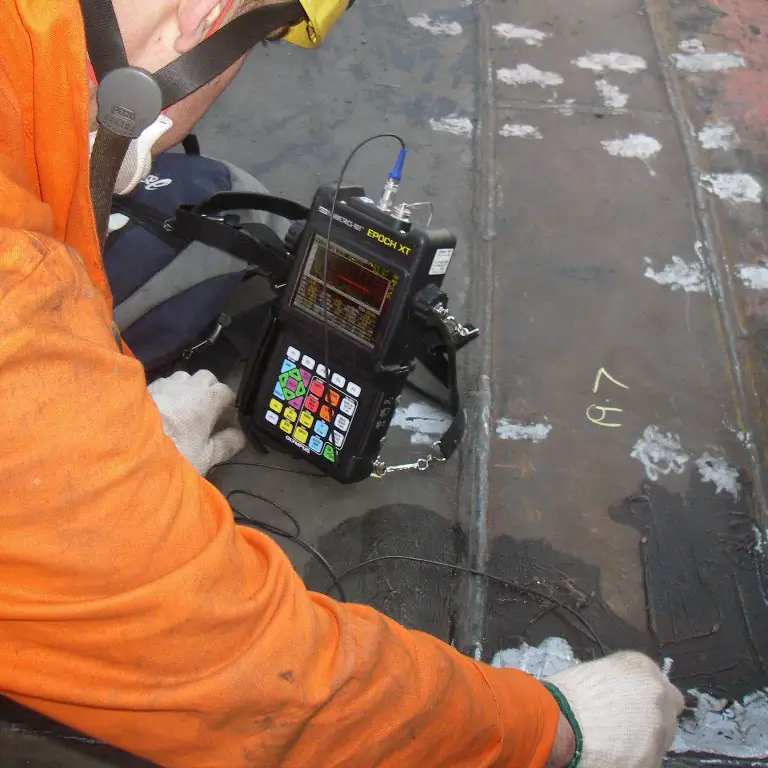
Marine Hull Thickness Measurements
One of the most important applications of ultrasonic thickness testing is hull thickness measurement.
The hull of a vessel is continually exposed to demanding environmental conditions. Salt water, corrosion, mechanical wear, coating breakdown and other factors can gradually reduce the thickness of structural steel.
In many cases, this deterioration is not immediately visible.
Ultrasonic thickness measurement provides a non-destructive method of determining the actual remaining thickness of the material. By taking measurements at selected locations across the vessel, areas of potential material loss can be identified and assessed.
Hull thickness measurements can assist with:
- Assessing the condition of vessel plating
- Identifying areas of corrosion and material loss
- Establishing remaining material thickness
- Supporting vessel surveys and inspections
- Identifying areas requiring further investigation
- Assisting with maintenance and repair planning
- Providing thickness measurement data for inspection purposes
The inspection methodology and measurement locations will depend on the vessel, its construction, condition, inspection requirements and the purpose of the survey.
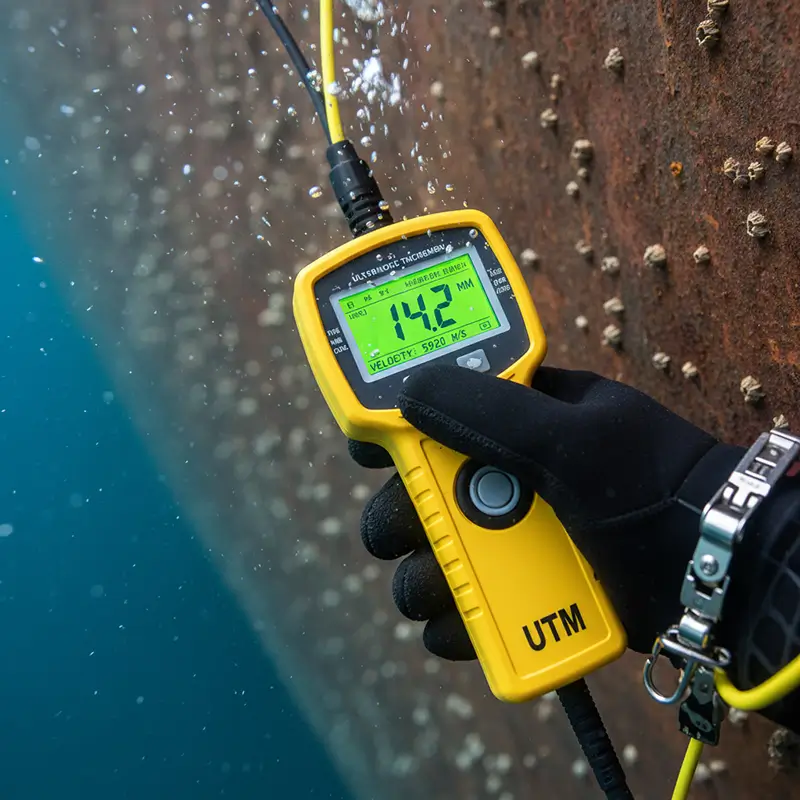
Marine UTM Inspection & Corrosion Assessment
Marine UTM inspections are particularly important where corrosion is suspected or where a vessel requires an assessment of structural material thickness.
Corrosion can occur in different areas of a vessel and may be influenced by exposure to seawater, moisture, chemicals, cargo, atmospheric conditions and the effectiveness of protective coatings.
Ultrasonic testing allows thickness measurements to be taken at specific inspection points without destructive removal of the underlying material.
Where appropriate, measurements can be compared against original or required material thickness to help identify areas where significant metal loss has occurred.
This makes ultrasonic thickness testing an important component of marine corrosion assessment and vessel inspection.
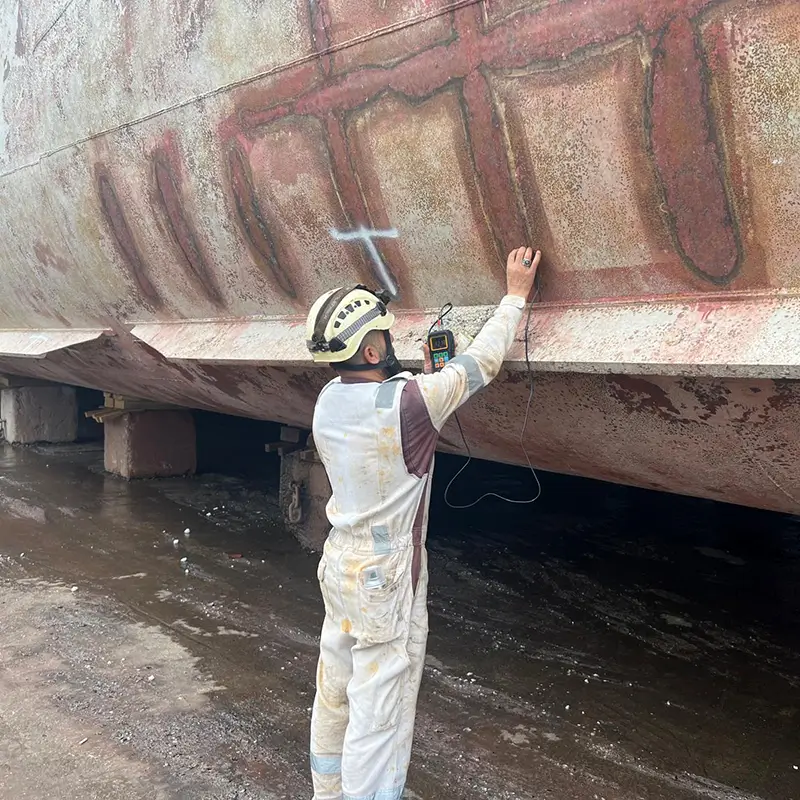
Why Is Ultrasonic Thickness Testing Important for Vessels?
The structural integrity of a vessel is critical to its safe operation.
A vessel may appear to be in good condition externally while corrosion or material deterioration is occurring beneath coatings or in less accessible areas.
Regular inspection and thickness measurement can provide valuable information about the condition of the vessel's structure.
Marine ultrasonic thickness testing can help vessel owners and operators:
Identify Material Loss
Accurate thickness measurements can reveal areas where corrosion or deterioration has reduced the original material thickness.
Assess Structural Condition
UTM data provides measurable information that can assist in evaluating the condition of vessel structures.
Support Inspection & Survey Requirements
Thickness measurement information may form part of wider vessel inspection, survey or classification-related processes, depending on the vessel and applicable requirements.
Plan Maintenance
Identifying areas of significant deterioration allows maintenance and repair requirements to be assessed more effectively.
Monitor Corrosion
Repeated measurements can provide useful information for monitoring changes in material thickness over time.
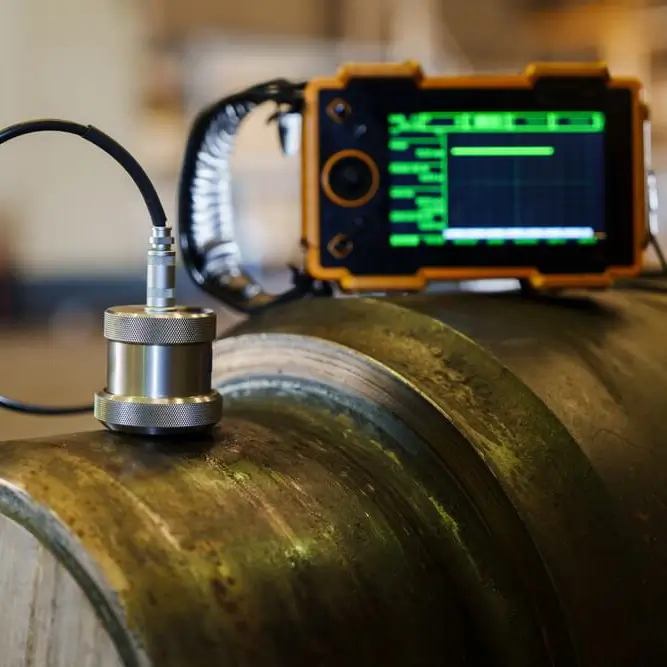
Our Marine Ultrasonic Thickness Testing Services
HD Engineering Services provides specialised marine inspection and NDT services designed to support the assessment of vessel and marine structures.
Our services include:
Marine Ultrasonic Thickness Testing
Ultrasonic measurement of suitable structural materials to establish remaining thickness and identify potential areas of material loss.
Hull Thickness Measurements
Thickness measurement of vessel hull plating and other structural areas where corrosion or deterioration may be present.
Marine NDT Inspection Services
Non-destructive testing and inspection services for marine applications.
Corrosion Thickness Testing
Ultrasonic measurement to assist in identifying and assessing corrosion-related material loss.
Hull Surveys
Specialised inspection and thickness measurement support for vessel hulls and structural components.
Marine Inspection Support
Technical inspection and NDT support for vessel owners, operators, contractors and other marine industry stakeholders.
Ultrasonic Thickness Testing for Marine Vessels
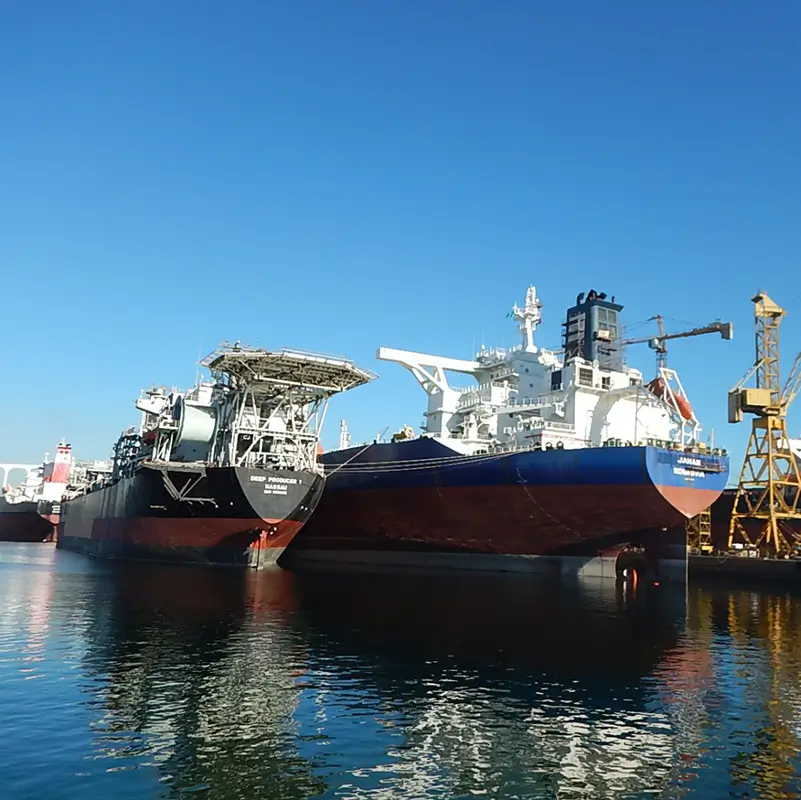
Different types of vessels may require ultrasonic thickness measurement depending on their construction, operating environment, condition and inspection requirements.
Marine UTM inspections can be applicable to a wide range of vessels and structures, including:
- Commercial vessels
- Cargo vessels
- Workboats
- Fishing vessels
- Tugboats
- Barges
- Passenger vessels
- Offshore-related vessels
- Marine structures
- Other steel vessels requiring thickness assessment
The inspection scope should always be determined according to the specific vessel and the applicable survey or inspection requirements.
How Does Marine Ultrasonic Thickness Testing Work?
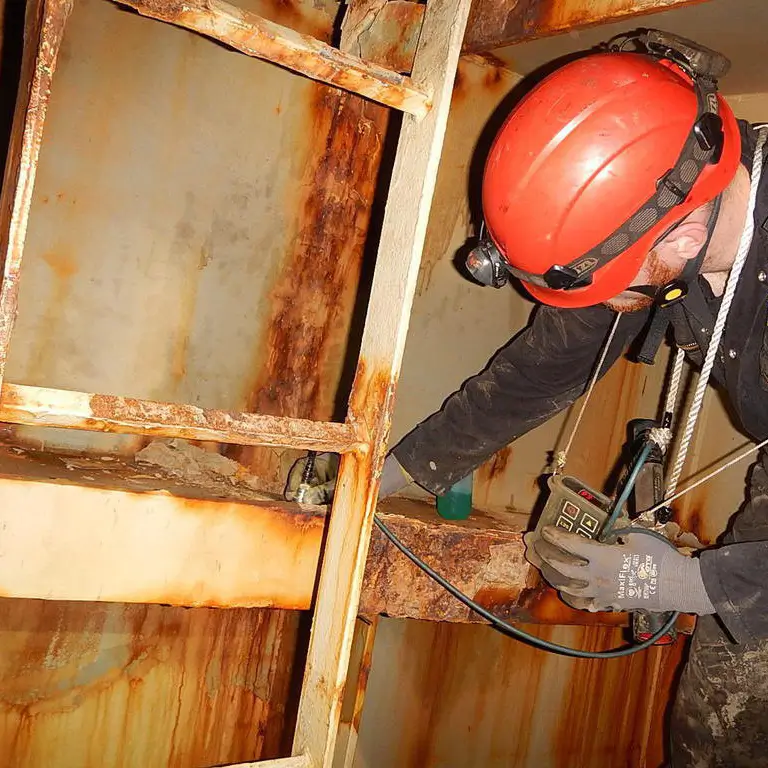
A typical ultrasonic thickness measurement involves several stages.
1. Inspection Planning
The inspection requirements are established and the areas requiring measurement are identified.
The inspection scope may take into account the vessel's construction, age, condition, previous inspection results and the purpose of the current survey.
2. Preparation of Inspection Areas
The relevant inspection points are accessed and prepared as necessary to obtain reliable ultrasonic measurements.
Surface condition can affect measurement accuracy, so suitable preparation may be required depending on the material and inspection location.
3. Ultrasonic Measurement
An ultrasonic thickness gauge and appropriate transducer are used to transmit high-frequency sound waves through the material.
The equipment measures the time taken for the ultrasonic signal to travel through the material and return, allowing the material thickness to be determined.
4. Recording Measurements
Thickness readings are recorded at the required inspection locations.
A sufficient number of measurements should be taken to provide an appropriate representation of the condition of the inspected structure.
5. Assessment & Reporting
The resulting measurements can then be reviewed and presented as part of the relevant inspection or survey documentation.
Where required, areas showing significant material loss can be identified for further assessment.

Marine NDT Inspection Services in South Africa
Marine ultrasonic thickness measurements can form an important part of vessel inspection and survey activities.
Depending on the vessel and the purpose of the inspection, thickness measurement data may be required to support assessment by relevant authorities, surveyors or classification organisations.
HD Engineering Services can provide specialised inspection and NDT support to assist clients with their vessel inspection requirements.
Where specific classification, statutory or regulatory requirements apply, the inspection scope should be established in consultation with the relevant authority, surveyor or classification organisation.
Supporting Vessel Inspection & Survey Requirements
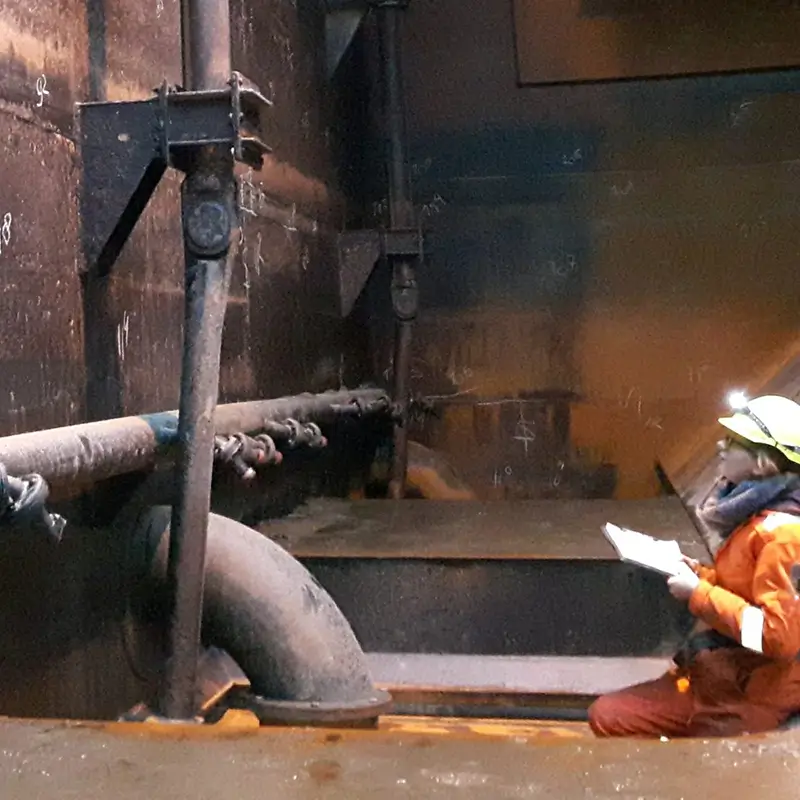
Marine ultrasonic thickness measurements can form an important part of vessel inspection and survey activities.
Depending on the vessel and the purpose of the inspection, thickness measurement data may be required to support assessment by relevant authorities, surveyors or classification organisations.
HD Engineering Services can provide specialised inspection and NDT support to assist clients with their vessel inspection requirements.
Where specific classification, statutory or regulatory requirements apply, the inspection scope should be established in consultation with the relevant authority, surveyor or classification organisation.

SAMSA Inspection Support
For vessels operating in South Africa, inspection requirements may involve the South African Maritime Safety Authority (SAMSA) and other relevant maritime stakeholders.
Ultrasonic thickness measurements and other NDT services may be required as part of wider vessel inspection or assessment processes.
HD Engineering Services provides marine inspection and NDT support to clients requiring assistance with vessel inspection requirements in South Africa.
Our services can include:
- Ultrasonic thickness measurements
- Hull thickness measurements
- Marine NDT inspections
- Corrosion assessment
- Vessel inspection support
- Technical measurement and reporting
The exact scope of work will depend on the vessel and the applicable inspection requirements.

DNV & Bureau Veritas Inspection Support
Vessels may also be subject to inspection and survey requirements associated with recognised classification organisations such as DNV and Bureau Veritas (BV).
Where thickness measurements are required to support classification-related inspection or survey activities, accurate and properly documented measurement data is important.
HD Engineering Services can provide specialist marine thickness measurement and NDT support for clients requiring inspection services associated with vessel surveys and classification requirements.
Specific classification requirements vary according to the vessel, class, survey and inspection scope.
Clients should therefore confirm the applicable requirements with the relevant classification organisation or surveyor.

Marine Ultrasonic Thickness Testing in Durban
Durban is one of South Africa's major maritime centres, making reliable marine inspection and NDT services particularly important for vessel operators and businesses operating in the region.
HD Engineering Services is based in Durban and provides specialist marine inspection and NDT services for clients in Durban, KwaZulu-Natal and elsewhere in South Africa.
Our marine services can support vessels requiring:
- Hull thickness measurements
- Ultrasonic thickness testing
- Marine NDT inspections
- Corrosion assessment
- Vessel inspection support
- Marine survey support
For vessels operating through the Port of Durban and the wider KwaZulu-Natal marine sector, local access to experienced inspection and NDT services can help simplify the process of arranging required technical inspections.

Why Choose HD Engineering Services?
HD Engineering Services combines specialised non-destructive testing, inspection services and marine expertise to provide technical support for vessel owners, operators and marine industry clients.
Our approach is focused on accurate measurement, professional inspection and reliable technical support.
Specialised NDT Experience
We provide conventional and specialised non-destructive testing services for industrial and marine applications.
Marine Inspection Capability
Our marine inspection services include ultrasonic thickness measurements, hull surveys and other specialist inspection requirements.
Durban-Based Service
Based in Durban, we are strategically positioned to support clients in the KwaZulu-Natal marine sector while providing services throughout South Africa.
Practical Technical Support
We work with clients to establish the appropriate inspection scope and provide the measurement and NDT services required for their specific application.
FAQs
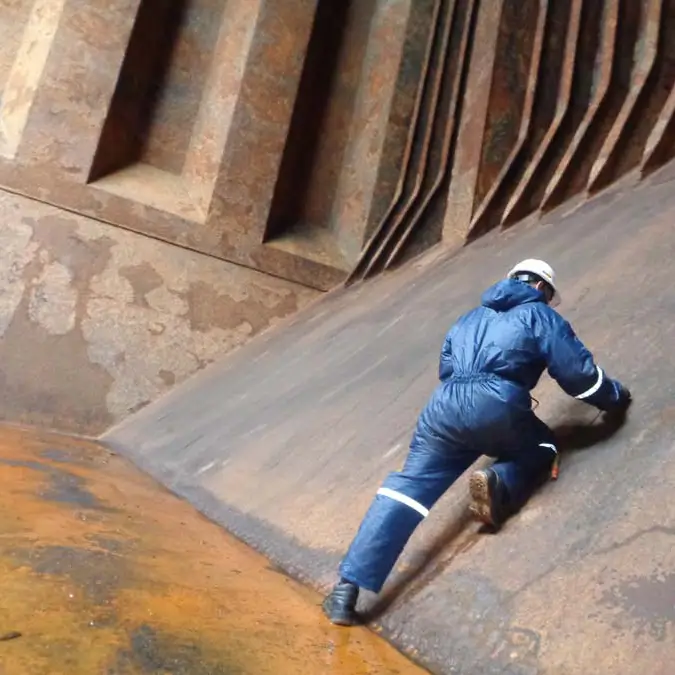
Marine ultrasonic thickness testing is a non-destructive inspection technique used to measure the thickness of vessel structures such as hull plating and other suitable materials.
It can help identify areas where corrosion, erosion or other deterioration has resulted in material loss.
Need Marine Ultrasonic Thickness Testing?
If you require marine ultrasonic thickness testing, hull thickness measurements or specialised marine NDT inspection services in South Africa, HD Engineering Services can assist.
Our Durban-based team provides specialist inspection and non-destructive testing services for marine and industrial applications.
Contact HD Engineering Services to discuss your vessel inspection requirements and arrange a marine ultrasonic thickness testing assessment.